How to decant perfume safely: 8 steps and the mistakes to avoid
Move perfume into a fresh glass atomiser with a funnel, syringe or pipette. Eight steps, the mistakes to avoid, and five perfumes to try in 3ml.
In this guide
How to decant perfume safely comes down to a fresh, dry glass atomiser, a small funnel and a slow transfer without forcing the original sprayer. The eight steps below cover spray-transfer, plus a syringe or pipette for a bottle with a removable cap. You will also learn how to avoid spills on varnish, overfilling, leftover water or cleaning alcohol, mixed scents and open flames, then how to label and store the fill. If that sounds like more kit than you want, a ready 3ml or 10ml decant is the simpler route, and five perfumes to start with in 3ml close the guide.
The kit for decanting perfume
Start with a fresh glass atomiser. Glass is chemically inert and impermeable, which is why bottles and jars are so often made of it; clear glass also lets you watch the fill level. By contrast, Wikipedia notes that PET plastic is permeable to oxygen. A new atomiser also avoids the residue that a used container can carry in its dip tube and spray head.
The rest of the kit is simple:
- A small funnel that sits securely in the atomiser's neck and catches the spray.
- A clean, needle-free syringe or a pipette for direct liquid transfer, but only when the original bottle has a removable sprayer.
- Plain labels for the perfume's name, concentration and amount.
- A tray or another protective covering for the work surface, plus a cloth for the outside of the atomiser.
Whatever container you choose, it must be completely dry. Water left after washing meets the perfume during filling, as does any cleaning alcohol that has not fully evaporated. A fresh atomiser is easier than trying to dry a narrow tube and spray mechanism at home.
Five perfumes to start with in 3ml
Five ready-filled originals, from rich woods to bright citrus and warm amber.
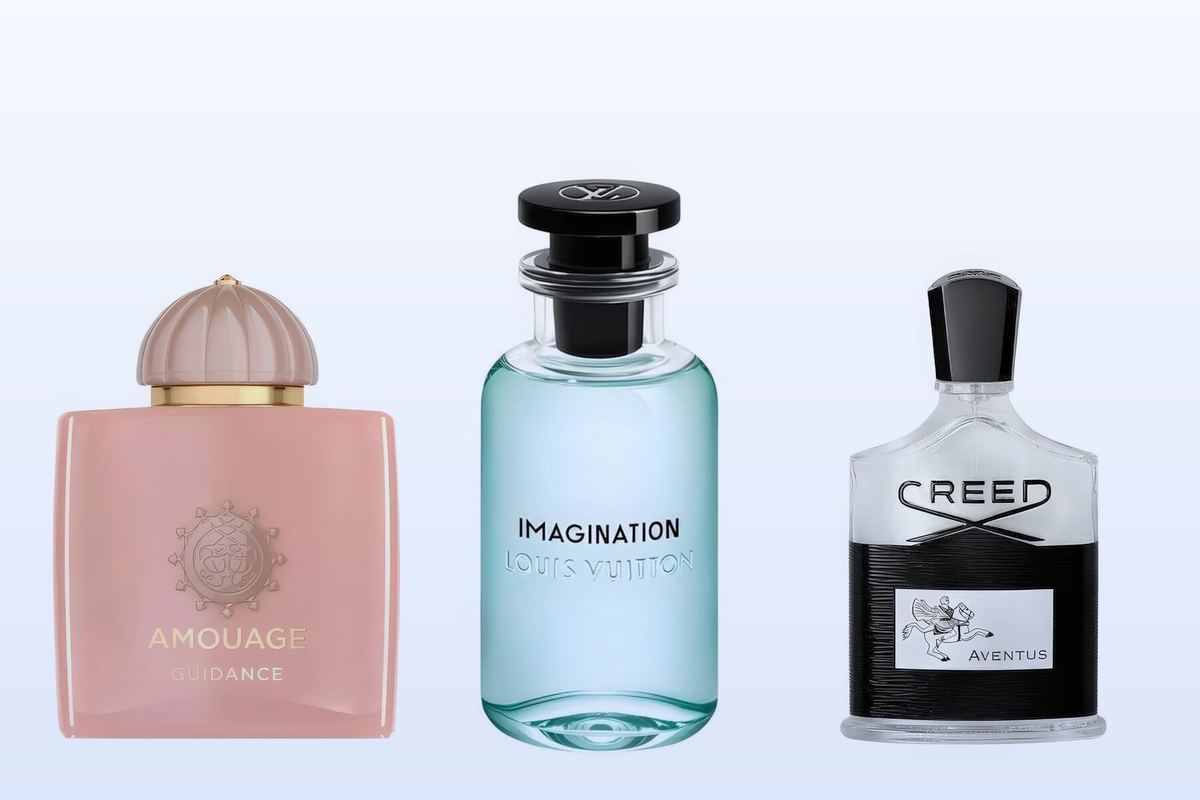
Amouage
Guidance
Pear, hazelnut and saffron over sandalwood, vanilla and ambergris, with a rich woody amber character.
3ml · 10ml · 30ml
Louis Vuitton
Imagination
Citron, bergamot and orange with ginger, Ceylon cinnamon and Chinese black tea; citrusy, green and aromatic.
3ml · 10ml · 30ml
Creed
Aventus
Apple, black currant and pineapple over birch, oak moss and musk, balancing fruit with smoky woods.
3ml · 10ml · 30ml
Parfums de Marly
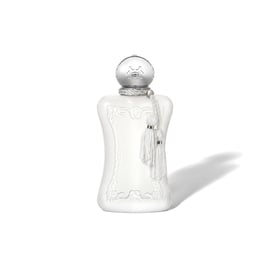
Valaya
Aldehydes and white peach with orange blossom and lily-of-the-valley, over a soft musky vanilla base.
3ml · 10ml · 30ml
Maison Francis Kurkdjian
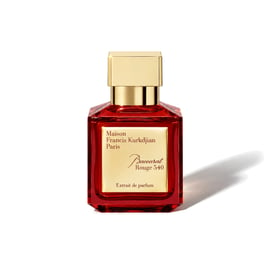
Baccarat Rouge 540 Extrait
Bitter almond and saffron with jasmine and cedar, grounded by ambergris, musk and woody notes.
3ml · 10ml · 30ml
How to decant perfume in 8 steps
- Choose a well-ventilated work area away from candles, flames and other ignition sources. Protect the table, especially varnished wood, and keep the original bottle and empty atomiser upright.
- Check that the receiving glass atomiser is clean and fully dry. Lay out the funnel, label and cloth before opening anything, so the filled container does not sit open while you search for them.
- Look at the original bottle's spray mechanism. If it has a crimped collar that does not lift off, leave it in place. Unscrew it only if the bottle is designed with a removable cap or sprayer.
- Place the small funnel firmly in the empty atomiser. For spray-transfer, bring the original nozzle right up to the funnel's opening so the mist goes into it rather than into the room.
- Press the original sprayer in short, controlled bursts and let the liquid run down the funnel. With a removable cap, instead draw perfume from the bottle with a clean syringe or pipette and release it gently into the atomiser.
- Stop below the neck rather than filling to the brim. Leaving a little space makes it easier to fit the spray head without pushing liquid over the rim.
- Remove the funnel, close the original bottle if you opened it, then fit the atomiser's spray head and close it properly. Wipe the outside and check around the neck for dampness before putting the cap on.
- Label the atomiser with the perfume's name, concentration and amount. Store it upright, closed, cool and dark, and keep the original bottle the same way.
Crimped sprayer vs removable cap
A crimped sprayer is fixed to the original bottle with a metal collar folded around the neck. It is not meant to be pulled or prised off. Never force it: you can damage the bottle or its closure. Spray-transfer through a funnel is the safe route, with the nozzle held close and each burst directed into the receiving atomiser.
A sprayer that unscrews gives access to the liquid for a syringe or pipette. Work steadily and avoid touching the inside of the bottle or the end of the transfer tool. Close the original bottle again as soon as you have drawn what you need.
If you cannot tell which closure you have, do not experiment with force. Use the spray head as it is.
The mistakes that waste perfume or damage a bottle
- Spilling on varnish. Keep both bottles over a protected tray, not directly on a dressing table. Wipe the atomiser's exterior before setting it down on furniture or putting it away.
- Overfilling. Stop below the neck. Liquid needs somewhere to go when the dip tube and spray head enter the atomiser.
- Mixing two perfumes. Do not top up an atomiser that still holds another scent. Residue in the container, tube or spray head can carry the previous perfume into the new fill.
- Leaving water or cleaning alcohol inside. A rinsed atomiser is not ready until every part is dry and the cleaning alcohol has evaporated completely.
- Working near an open flame. Ethanol is flammable, so candles, flames and other ignition sources do not belong beside a decanting session or an atomiser that is still drying.
- Ignoring air, light and heat. Fragrance compounds can degrade when exposed to them. Close the atomiser promptly and do not leave the fill on a sunny or warm surface.
Short bursts also waste less perfume than spraying towards a funnel from a distance. The aim is to catch liquid, not fill the room with mist.
Cleaning and labelling a decant bottle
A fresh atomiser avoids the cleaning problem entirely. If you reuse one, empty it and clean every part that touched the old perfume. When you use cleaning alcohol, follow its product instructions and let it evaporate fully before refilling. Keep it away from flames while it dries.
Water is not a shortcut. Droplets can remain in the dip tube and spray head even when the outside looks dry, so any part washed with water must dry completely. Never refill while either water or cleaning alcohol remains, and never add a second perfume to disguise residue from the first.
Once the outside is dry, add a plain label naming the perfume, its concentration and the amount inside. This matters when several clear atomisers sit together: the name should come from the label, not from memory.
How long does a small fill keep?
There is no single keeping time for a home-decanted perfume. Its exposure to oxygen, light and heat matters, as does how well the atomiser closes. Oxygen in the space above the liquid can gradually alter the scent, while light and heat add further stress.
Keep the fill upright, closed, cool and dark. A spray dispenser also limits contact with dust and skin compared with an open container. Oxidised linalool can irritate skin, which is another reason to minimise unnecessary air exposure rather than treating storage as an afterthought. Our guide to how to store perfume compares suitable storage spots.
Decant only what you intend to use, and give the atomiser the same care as the original bottle.
When a ready 3ml or 10ml decant is simpler
A ready decant removes the kit, the transfer and the cleaning. Choose a 3ml decant to discover a perfume, with around 60 sprays, or a 10ml decant for around 200 sprays. It is the simpler option when you want to wear the original without handling its sprayer yourself.
10ML decants every perfume itself, using bottles bought directly from the brands and from authorized EU distributors. We fill every atomiser by hand, straight from the house's bottle. Nothing is added and nothing is diluted. Each atomiser is then sealed and labelled with the perfume's name and its size.
The 10ML authenticity page sets out that sourcing, hand-filling, sealing and labelling. For the separate question of how decants are produced, read how perfume decants are made. If you are judging a seller, use our checklist for assessing perfume decants.
Five perfumes to start with in 3ml
These five ready-filled decants cover rich woods, citrus and tea, fruit with smoky birch, a bright white floral and warm amber. Each product link lets you choose the 3ml size.
Guidance by Amouage
Guidance is a women's Eau de Parfum from 2023. Pear, hazelnut and olibanum open the composition. Jasmine sambac joins osmanthus, rose and saffron in the heart, while labdanum, ambergris, sandalwood, vanilla and akigalawood form its woody, amber base. Its listed occasion is going out, and community voters pick it most often for autumn, winter, night and evening wear. Most community voters rate its longevity "eternal". A 3ml decant is €15.12.
Imagination by Louis Vuitton
Imagination is a men's perfume from 2021. Citron, Calabrian bergamot and Sicilian orange lead into Tunisian neroli, Nigerian ginger and Ceylon cinnamon. Chinese black tea, ambroxan, guaiac wood and olibanum sit underneath, with citrus, green and aromatic accords. Voters choose it for spring, autumn and winter, and for day, office and evening wear. Most community voters rate its sillage "moderate". A 3ml decant is €16.92.
Aventus by Creed
Aventus is a men's Eau de Parfum from 2010. Apple and black currant join lemon, bergamot and pink pepper at the opening. Pineapple, patchouli and Moroccan jasmine form the heart, before birch, musk, oak moss, ambroxan and cedarwood create a woody, smoky base. Its listed occasion is going out, while voters associate it with spring, summer and daytime. Community votes on its sillage lean "strong". A 3ml decant is €11.88.
Valaya by Parfums de Marly
Valaya, launched in 2023, is listed for women. Its bright, fruity opening combines white peach with aldehydes, mandarin orange and bergamot. Vetiver and mahonia sit beside orange blossom and lily-of-the-valley in the fresh white-floral heart, over musk, ambroxan, akigalawood and vanilla. Its listed occasion is work, and voters pick it for spring and day wear. Community votes on its longevity lean "long lasting". A 3ml decant is €12.96.
Baccarat Rouge 540 Extrait by Maison Francis Kurkdjian
Launched in 2017, Baccarat Rouge 540 Extrait is a unisex Extrait de Parfum. Saffron and bitter almond lead, followed by Egyptian jasmine and Virginia cedar. Ambergris, woody notes, musk, ambroxan and cashmeran build its amber, musky base. Voters pick it most often for winter, autumn, night and evening wear. Community votes on its sillage lean "strong". A 3ml decant is €20.52.
Start with the style you want to wear, then keep the atomiser closed and dark between uses. A ready 3ml decant gives you the perfume without any home transfer at all.
The bigger picture: How to find your signature scent in three steps.
Frequently asked questions
- How do you decant perfume at home without spilling it?
- Use a small funnel seated firmly in a dry glass atomiser and spray in short bursts with the nozzle close to the opening. Protect the work surface, keep both containers upright and stop below the neck before fitting the spray head.
- Can you decant a perfume with a crimped sprayer?
- Yes: leave the crimped sprayer in place and spray through a small funnel into the receiving atomiser. Never force or prise off the collar; a syringe or pipette is for a bottle with a removable sprayer.
- Should a decant bottle be glass or plastic?
- Glass is the better choice because it is chemically inert and impermeable, while PET plastic is permeable to oxygen. Choose a fresh glass atomiser with a secure closure, and make sure it is completely dry before filling.
- How do you clean a decant bottle between perfumes?
- Empty the atomiser and clean every part that touched the previous perfume, then let everything dry completely. If you use cleaning alcohol, allow it to evaporate fully; never refill while water or cleaning alcohol remains, and never mix two perfumes in one atomiser.
Sources
Wear it for a week, not ten seconds.
Designer and niche fragrances in 10ml decants, so you can live with a scent before you commit.
Shop decantsMore on choosing a perfume
Safe blind buy perfumes: easy styles to wear before you buy the bottle
The safest blind buy perfume is one you wear first. Twelve easy-to-wear perfumes grouped by style, from fresh to warm, and how to try each one before a full bottle.
Chypre perfume and the other fragrance families, explained
What a chypre perfume is, how a fougère differs, and what the seven fragrance families mean, with one or two perfumes from each family to wear before you choose.
How are perfume decants made? From bottle to atomiser
How perfume moves from its original bottle into a small atomiser, why glass and a tight seal matter, how to store a decant and five perfumes to try in 3ml.
Keep reading
Best vanilla perfumes 2026: 17 picks by the vanilla you like
Vanilla is not one smell. Seventeen vanilla perfumes grouped by style, boozy, ambery, gourmand, creamy, powdery and fresh, compared side by side, with picks for men and women and a way to find yours.
Best perfume for women 2026: 23 picks, classic to new
The best perfume for women is the one in the style you already love. Twenty-three women's perfumes grouped by style, classics and newer launches, compared side by side, and a three-decant way to find yours before you buy a bottle.
10ML Price-per-ml Index 2026: what perfume costs per ml
What perfume costs per ml in 2026: medians at 3ml, 10ml and 30ml, niche vs designer, and official full-bottle prices of the same perfumes. Free CSV and JSON.