How to test perfume in store without pressure
Start on labelled paper strips, try your favourites on skin, then leave before deciding. A calm store-visit method, with useful phrases and five perfumes to practise with.
In this guide
If you want to know how to test perfume in store, start with labelled paper strips, put only your favourites on skin, and leave before choosing. Wear them for the rest of the day rather than buying at the counter. The visit gives you a shortlist; living with a scent tells you whether you want the bottle.
Set the plan before the first spray
Make this a looking visit, not a buying visit. That small decision removes the need to settle anything while somebody waits beside you. You can appreciate helpful advice without making a purchase.
Arrive with skin free of perfume where you intend to try the testers. Strongly scented hand cream can make the comparison less clear, so leave it off those areas too. You want to smell the perfume you applied, not an accidental mixture.
Choose a direction rather than a long shopping list. Perhaps you want something fresh for daytime, or a sweeter scent for evenings. Ask for that starting point and explain what you usually dislike. Plain descriptions are useful; you do not need to identify every note.
This guide covers the visit itself. If you are still working out your preferences, our guide to finding your signature scent covers the longer search.
Five perfumes for a focused wear test
Choose a profile that interests you, then compare its opening and later notes away from the counter.
Giorgio Armani
Acqua di Giò
Citrus and sea notes with rosemary, white musk and woods.
3ml · 10ml · 30ml
Yves Saint Laurent
Black Opium
Pear and orange blossom lead into coffee, vanilla and woods.
3ml · 10ml · 30ml
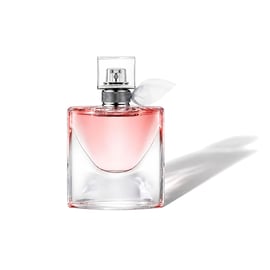
Lancôme
La Vie Est Belle
Black currant and pear, a floral heart, then praline, vanilla and patchouli.
3ml · 10ml · 30ml
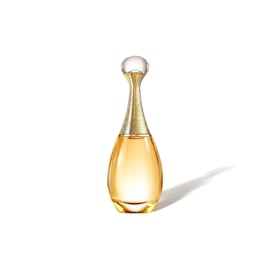
Dior
J'adore
Fruity top notes, a jasmine and rose heart, with musk and cedar underneath.
3ml · 10ml · 30ml
Use paper strips to narrow the choice
Ask for each perfume on a separate blotter. Write its full name before the strips become a handful of anonymous possibilities. Include the version written on the tester, rather than relying on the bottle's colour or shape.
Let the freshly sprayed strip settle before smelling it. Hold it near your nose without pressing it against your skin. Then put it aside and return to it later. A first impression is useful, but it is not the whole fragrance.
Keep the strips apart rather than folding them together in a pocket. If you cannot remember which is which, stop and sort them out before adding another. The aim is to make the next decision easier, not to collect the most strips.
For each one, record a brief reaction in your phone. Try phrases such as “enjoy the opening”, “too sweet for me” or “want to try on skin”. These are more useful later than trying to reproduce a sales description.
Paper is the first filter. Use it to reject scents you clearly do not enjoy and to choose which deserve a skin test. You do not have to put every interesting strip on your arm.
Try a small shortlist on skin
Limit the skin round to two perfumes, or three at most if you can give each a separate area. That is a manageable plan, not a scientific limit that applies to every nose. Fewer is fine. If you are unsure, wear one and come back for the other.
Ask before using a tester if you are uncertain how it works. Apply each fragrance to a separate, clean patch of skin. Do not layer them or rub the sprayed areas together. Note which perfume went where so you can check it later without guessing.
A wrist is convenient, but choose an area you can leave alone. Avoid spraying a spot you are about to wash. Do not add more just because the opening feels less obvious after repeated smelling; pause first.
Paper and skin are different testing surfaces. A strip helps you compare a line-up, while your skin helps you decide whether you enjoy wearing the scent. Neither needs to be treated as a laboratory result. Your reaction during an ordinary day is the useful part.
Take breaks instead of forcing a decision
When everything starts to blur, stop smelling. Walk away from the counter and spend some time in fresh air. You do not gain much by continuing until every strip seems interchangeable.
Do coffee beans help smell perfume? You do not need them for this method. Rather than adding another smell, take a quiet break and return when you feel ready. There is no need to turn the visit into an endurance exercise.
Check the skin tests again outside the fragrance area. Notice whether you still enjoy them when the surrounding sprays are gone. Later, return to each one separately rather than moving rapidly between your wrists.
The dry-down is the later stage of the scent, after its opening has settled. Leave time for it before deciding. Our fragrance notes explanation helps you read the top, heart and base notes a perfume lists.
What to say when you feel rushed
A clear sentence is kinder than an explanation you keep expanding. You do not need a dramatic reason to leave without a bag. State your plan early, then repeat it calmly if the conversation returns to buying.
- “I'm choosing what to try today. I'm not buying a bottle yet.”
- “Could I have that on a labelled strip first, please?”
- “I'd like to wear this outside before deciding.”
- “Thank you. I'll write down the exact version and think about it.”
- “No, thank you. I'm happy to leave it there today.”
If somebody suggests another fragrance, you can decline without judging their recommendation. “I have enough to compare for now” keeps the visit focused. Helpful staff can guide your choices; they cannot decide what you will enjoy wearing tomorrow.
A promotion does not have to change your plan. If you came to gather information, leaving with clear notes is a successful visit. There is no unfinished transaction to apologise for.
Five perfumes to practise the method with
These are starting points for noticing different openings and bases, not a checklist to spray in a single visit. Choose the style that interests you and use the same method. The note descriptions below are a map for paying attention, not a promise that you will perceive every ingredient.
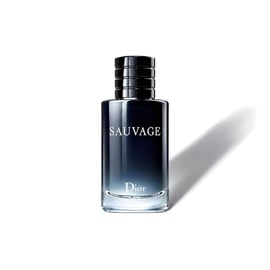
Sauvage by Dior
Sauvage starts with pepper and Calabrian bergamot. Lavender, Sichuan pepper and vetiver sit in its heart, with ambroxan, cedar and labdanum in the base. Follow the move from citrus and spice towards that woody, amber structure.
Community voters most often choose it for spring and summer. Use your wear test to ask whether you enjoy both the fresh start and the later character, rather than deciding on the bergamot alone.
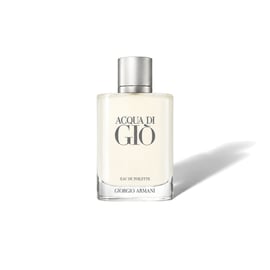
Acqua di Giò by Giorgio Armani
Acqua di Giò brings lime, lemon and bergamot into an opening that also includes jasmine and neroli. Sea notes and rosemary appear in the heart, followed by white musk, cedar, oakmoss, patchouli and amber.
Day wear is where community voters most often place it. Try following the citrus, marine and woody parts in turn. You are not trying to pass a note-identification exam; notice which stage you most want to return to.
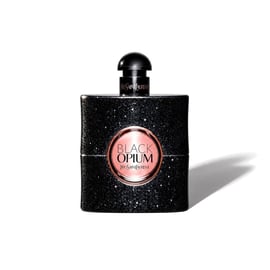
Black Opium by Yves Saint Laurent
Black Opium opens with pear, pink pepper and orange blossom. Coffee, jasmine and bitter almond lead into a base of vanilla, patchouli, cashmere wood and cedar. It gives you a sweet coffee and vanilla profile to consider beyond the fruity opening.
Winter is the season community voters most often pick for it. During your test, ask whether you enjoy the later vanilla and woods as much as the first impression. Liking the start does not oblige you to like the whole development.
La Vie Est Belle by Lancôme
La Vie Est Belle begins with pear alongside black currant. Its heart combines orange blossom with iris and jasmine, before a base built from praline, patchouli, vanilla and tonka bean. Follow the fruit into the floral middle, then notice how you feel about the sweet base.
In community votes, winter and autumn come up most often. If the opening attracts you, leave the later stages room to speak before deciding whether that sweetness belongs in your day.
J'adore by Dior
J'adore begins with pear, melon, magnolia and peach among its top notes. Jasmine, freesia, rose and tuberose appear in the floral heart. Musk, vanilla, cedar and blackberry sit underneath.
For season, community voters most often pick spring. This is a useful prompt to separate enjoying fruity top notes from enjoying a floral heart. Check your reaction again once the opening is no longer the main thing you notice.
Leave with notes, then wear the winner at home
Before leaving, check that you recorded the exact names and versions. Add what you liked, what bothered you and whether you want another wear. Avoid writing only “nice”. Tomorrow, that word will not tell you why you preferred one wrist.
Do not buy the full bottle that day. Let the skin tests develop over the hours that follow and revisit your notes afterwards. You may have a clear favourite, or you may discover that neither belongs on your shortlist. Both outcomes are useful.
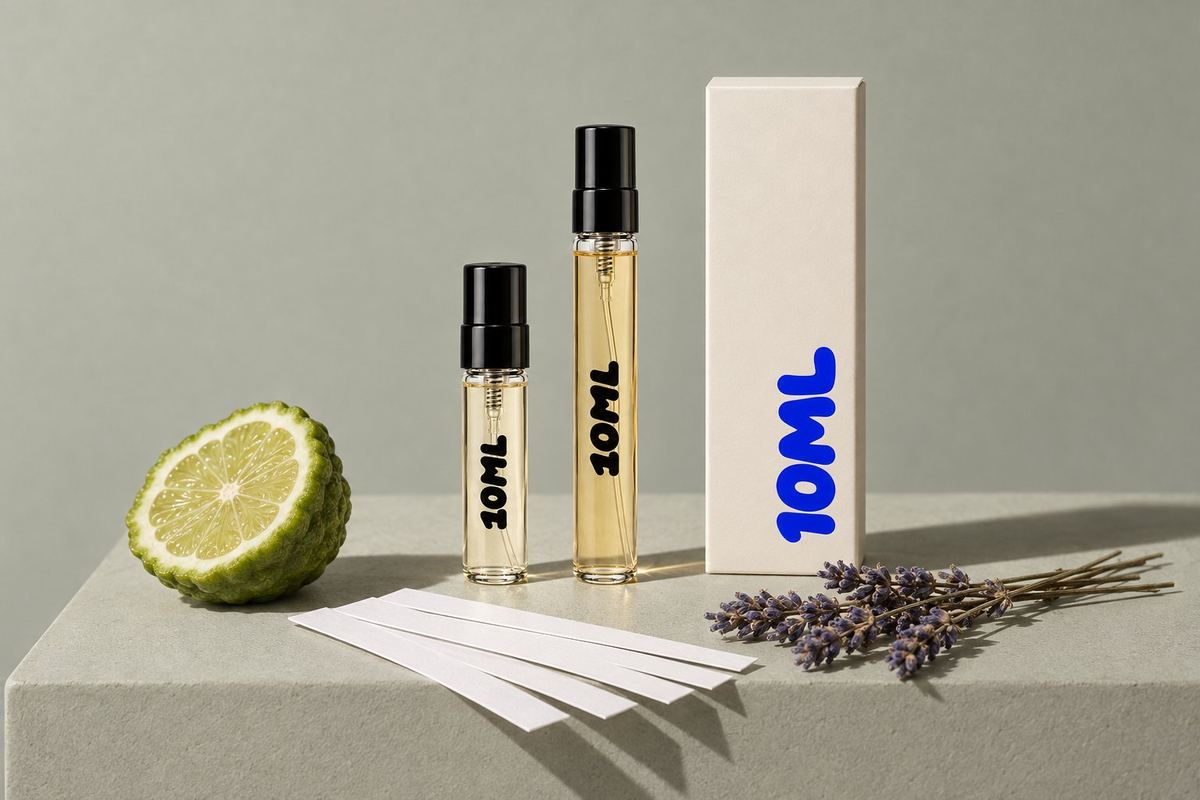
Next, take the winner into ordinary life with a 3ml decant from 10ML. Wear it through a week of real days rather than trying to recreate the excitement of the counter. Notice whether you want to put it on again, not just whether you liked discovering it.
A 10ml decant gives you more room to keep wearing a scent once it has earned that place. You can explore the small-size perfume selection without turning the first pleasant impression into a full-bottle decision.
If you would like more starting points, safe blind buy perfumes groups approachable styles to explore. Keep the same rule even with a promising shortlist: try it, leave, wear it again. A good choice should still feel good when nobody is waiting for your answer.
Frequently asked questions
- How do you test perfume in store without buying straight away?
- Say at the start that you are choosing what to try, not buying a bottle today. Narrow the choice on labelled strips, try your favourites on separate areas of skin, then leave and revisit them later.
- How many perfumes can you test at once?
- Limit the skin round to two perfumes, or three at most if you can keep them separate. This is a practical way to make comparison manageable, not a fixed limit for everyone. Stop sooner if the scents become difficult to distinguish.
- Should you use a perfume test strip or skin?
- Use both for different jobs: strips help narrow the choice, while skin lets you assess wearing the perfume. Label every strip and give your favourite a skin test before deciding on a bottle.
- Do coffee beans help when smelling perfume?
- You do not need coffee beans for a useful perfume test. If the scents start to blur, stop smelling and take a fresh-air break rather than adding another smell.
- What should you do after the in-store skin test?
- Leave the store, let the perfume develop during the rest of your day and record your reaction. Try the winner in a 3ml decant from 10ML over ordinary days before choosing a full bottle; choose a 10ml decant when you want to keep wearing it.
Wear it for a week, not ten seconds.
Designer and niche fragrances in 10ml decants, so you can live with a scent before you commit.
Shop decantsMore on choosing a perfume
Chypre perfume and the other fragrance families, explained
What a chypre perfume is, how a fougère differs, and what the seven fragrance families mean, with one or two perfumes from each family to wear before you choose.
Safe blind buy perfumes: easy styles to wear before you buy the bottle
The safest blind buy perfume is one you wear first. Twelve easy-to-wear perfumes grouped by style, from fresh to warm, and how to try each one before a full bottle.
How to check if perfume is authentic: label, batch code, seller and price
Four quick checks tell you whether a perfume is the real thing before you spray it: who sold it, what the label says, whether the batch codes match, and whether the price makes sense.
Keep reading
What is oud? What oud perfume smells like, and sixteen to try from soft to dark
Oud is the dark resin that forms inside agarwood, and in perfume it smells woody, smoky and resinous. What it is, what it smells like, and sixteen oud perfumes laid out as a ladder from soft to dark.
Eau de parfum vs eau de toilette (and extrait): what changes, and which strength to try
Eau de parfum carries more perfume oil than eau de toilette, and extrait de parfum more again, but one name on two strengths often hides two formulas. What each label means, and how to wear both before you choose.
10ML Price-per-ml Index 2026: what perfume costs per ml
What perfume costs per ml in 2026: medians at 3ml, 10ml and 30ml, niche vs designer, and official full-bottle prices of the same perfumes. Free CSV and JSON.