

Fragrance notes explained: top, heart and base, and how to read a notes list
Top, heart and base notes show how a perfume changes from first spray to dry-down. Learn to read a notes list, then see it work on five perfumes.
In this guide
Fragrance notes are the ingredients a perfume lists in three layers: top notes you smell first, heart notes that form the body, and base notes that last longest. Perfume notes explained this way are the only thing you can read about a scent online before you smell it, so it pays to read them well.
This guide covers what each layer does, why the pyramid is a guide rather than a clock, and how five perfumes from our catalogue behave when you read their lists layer by layer.
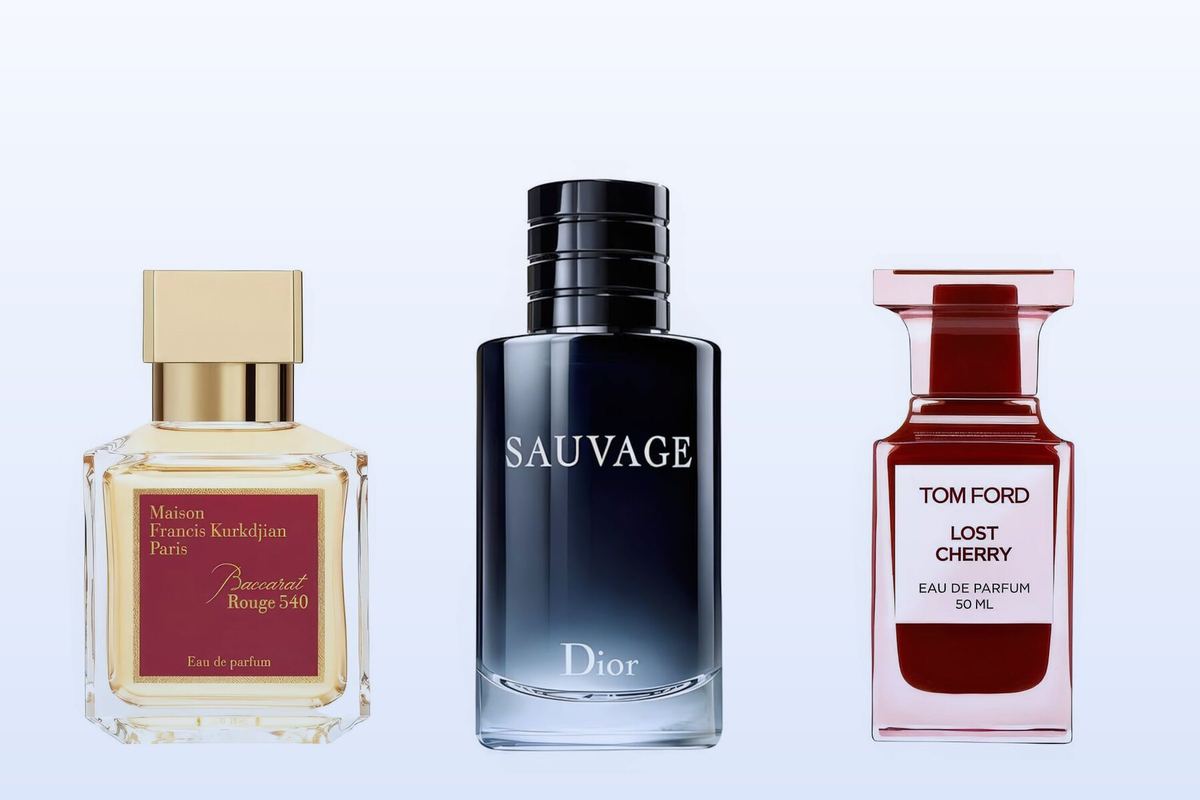
Five perfumes to read through their notes
Each of these shows a different way a notes list can be built, from spice and herbs to a single cherry theme.
Dior
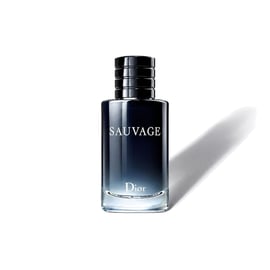
Sauvage
Pepper and Calabrian bergamot open into a lavender, geranium, vetiver and patchouli heart, then Ambroxan, cedar and labdanum.
3ml · 10ml · 30ml
Maison Francis Kurkdjian
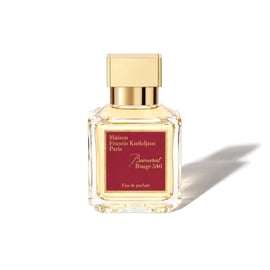
Baccarat Rouge 540
Saffron and jasmine on top, amberwood, ambergris and Hedione in the heart, then cedar, sugar, Ambroxan and oakmoss.
3ml · 10ml · 30ml
Tom Ford
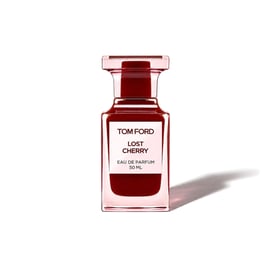
Lost Cherry
A cherry theme in the top and heart, ending in vanilla, tonka bean, balsam, sandalwood and spice.
3ml · 10ml · 30ml
Le Labo
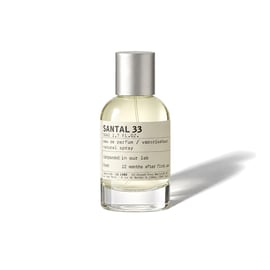
Santal 33
A short list: cardamom and violet, virginia cedar and papyrus, then sandalwood, leather and amber.
3ml · 10ml · 30ml
Jo Malone London
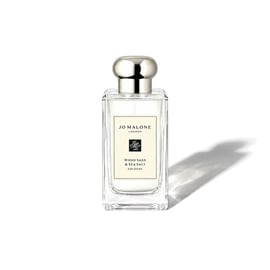
Wood Sage & Sea Salt
Sage, grapefruit and sea salt on top and a base of ambrette and seaweed, with no heart written down.
3ml · 10ml · 30ml
Top, heart and base notes in plain words
Think of a perfume as three overlapping stages. You meet the top first, the heart takes over as the top fades, and the base is what stays on your skin at the end.
| Layer | What you notice | When it arrives | Typical materials |
|---|---|---|---|
| Top notes | Light, bright, quick to fade | In the first minutes | Citrus, herbs, light spice |
| Heart notes | The body and character of the perfume | As the top fades | Florals, spices, green notes |
| Base notes | Depth, warmth and staying power | Usually not clear until about 30 minutes after you apply it | Woods, resins, musks, vanilla, amber |
Top notes are the lightest materials, so they evaporate first. Citrus such as bergamot and herbal notes such as lavender often sit here. They give the first impression, and they are also the part you judge in a shop spray strip or a quick test.
Heart notes make up the middle. This is where many florals live, for example rose and jasmine, along with spices and green notes. The heart is what the perfume is about once the opening settles.
Base notes are the slowest and the heaviest. Sandalwood, vanilla, musk and amber are typical examples. They are usually not perceived until about 30 minutes after application, and they carry the dry-down, the stage you will wear for most of the day.
Why the pyramid is a guide, not a timetable
The notes pyramid is a useful map. It is not a schedule.
A perfume is a blend, so the layers overlap rather than switch at set moments. A top note can still be there when the heart appears, and a base note can be faint from the first spray. Houses also choose how to write the list. Some publish a full fragrance pyramid, some give a flat list, and some use imaginative names for the layers.
Your skin and the weather change the picture too. The same perfume can open sharper on one person and softer on another. Read a notes list as a description of the ingredients and their rough order, and expect the exact timing to be yours alone.
Three perfumes read through their own pyramid
The easiest way to learn the layers is to read a few lists next to what the perfume does. The three below have different shapes: one built on spice and herbs, one that puts a floral at the top, and one where a single idea runs through the top and the heart.
Sauvage by Dior
Dior Sauvage launched in 2015 and is listed for men. It opens with Pepper and Calabrian bergamot, so the first impression is bright and peppery.
The heart is the busiest part of the list: Sichuan Pepper, Pink Pepper, Lavender, Geranium, Vetiver, Patchouli and elemi. Spice and herbs lead, and Vetiver and Patchouli add an earthy line underneath. The base closes with Ambroxan, Cedar and Labdanum.
On longevity, most community voters say long lasting. The community leans towards strong on its sillage. Spring and summer are the seasons voters pick most often, and day wear the occasion.
What the list teaches: a short top can hand over to a long, layered heart, so judge it after the opening has gone.
Baccarat Rouge 540 by Maison Francis Kurkdjian
Maison Francis Kurkdjian Baccarat Rouge 540 launched in 2015 and is a niche unisex perfume. Its list breaks the usual habit of opening with citrus: the top is Saffron and Jasmine, a spice and a white floral.
The heart is Amberwood, Ambergris and Hedione, and the base adds Cedar, Sugar, Ambroxan and Oakmoss. If you wonder how the ambergris and Ambroxan in the list differ, our guide to ambergris vs ambroxan explains it.
The community votes on its longevity lean eternal, and its sillage leans strong. Voters pair it most often with fall, winter and spring, and with night and evening wear.
What the list teaches: the layers describe volatility, not flavour. A floral at the top is possible when the material itself is light.
Lost Cherry by Tom Ford
Tom Ford Lost Cherry launched in 2018 and is listed for women. Here the cherry runs through the top and the heart, which makes it a good lesson in how a theme develops.
The top is Bitter Almond, Black Cherry and Cherry Liqueur. The heart keeps the fruit going with Sour Cherry and Plum, then adds Jasmine Sambac and Turkish Rose. The base is the longest list in this guide, led by Vanilla and Tonka Bean and followed by Cinnamon, Peru Balsam, Sandalwood, Benzoin, Cloves, Cedar, Patchouli and Vetiver.
Longevity votes lean moderate. Most voters call its sillage moderate. It is picked most often for winter and fall, and for night wear.
What the list teaches: a long base means the dry-down is a different scent from the opening.
Two lists that bend the pyramid
Not every house writes a perfect three-layer list. These two show what to do when a list is short or oddly shaped.
Santal 33 by Le Labo
Le Labo Santal 33 launched in 2011 and is a niche unisex perfume. Its list is short and clean: Cardamom and Violet on top, Virginia Cedar and Papyrus in the heart, and Sandalwood, Leather and Amber in the base.
A short list does not mean a thin perfume. It means each note carries more of the picture.
Votes on its longevity lean long lasting, and votes on sillage lean moderate. Fall, spring and winter come up most often, with day and evening wear.
Wood Sage & Sea Salt by Jo Malone London
Jo Malone London Wood Sage & Sea Salt launched in 2014 and is listed as unisex. The house lists a top of Sage, Grapefruit and Sea Salt and a base of Ambrette and Seaweed. No heart is written down.
Do not read a missing layer as a gap in the perfume.
Votes on its longevity lean moderate. Most voters call its sillage intimate. Summer and spring are the usual picks, for day and office wear.
Notes, accords and fragrance families
Three words get mixed up, and they answer three different questions.
- Notes are the named ingredients, placed in layers.
- Accords are the overall impressions that several notes create together, such as woody, amber or fresh spicy.
- Families are the broad groups a perfume belongs to, such as floral, woody or fresh.
A notes list tells you what is in the perfume. The accords tell you what it smells like once the notes blend. The family tells you where it sits among other perfumes. Our guide to fragrance families walks through the groups, and the notes index lets you read about a single ingredient in depth.
How to read a notes list before you buy
You can get a long way from the list alone. Use it in this order.
- Find the layer each note sits in. Light notes on top and heavy notes at the base is the normal shape.
- Look for notes that repeat across layers, as the cherry does in Lost Cherry. That theme usually defines the perfume.
- Check for a missing layer, and lean on the accords when the heart is not written down.
- Read the accords as the short version of what the whole list smells like.
- Look at the community votes for longevity, sillage, season and time of day, and treat them as votes, not promises.
If you want a wider method, our guide on how to choose perfume without smelling it goes further. If wear time worries you, read how to make perfume last longer.
Smell the dry-down with a 3ml
A notes list explains the dry-down, but only your skin can show it. The opening is the part everyone judges, and it is the part that fades first. The base is the part you live with.
So wear a perfume properly before you commit to a bottle. A 3ml decant gives you around 60 sprays, enough to wear it on several different days. Put it on in the morning, note the opening, then check again when the heart settles and once more late in the day to see what remains.
Sauvage, for example, is €8.10 for a 3ml, €23.40 for a 10ml and €62.37 for a 30ml. Liked the dry-down? A 10ml holds around 200 sprays, enough for weeks of wear, and a 30ml holds around 600 for keeping.
Start with the notes list, shortlist two or three perfumes, and try each as a 3ml before you buy more.
Frequently asked questions
- What are top, heart and base notes?
- They are the three layers of a perfume. Top notes are the light materials you smell first, heart notes form the body as the top fades, and base notes give depth and last longest.
- How long do top notes last?
- Top notes last the first minutes, and they fade first. The heart takes over after that, and the base is usually not perceived until about 30 minutes after application.
- Why does a perfume smell different after an hour?
- Because the lightest materials evaporate first and the heavier ones are left. What you smell moves from the top notes to the heart and then the base, so the dry-down is not the same as the opening.
- Can I trust a notes list when buying online?
- A notes list is a good guide to the ingredients and their rough order, but not to timing or to how a perfume wears on your skin. Pair it with the accords and the community votes, then wear a 3ml decant before you commit to a bottle.
Sources
Wear it for a week, not ten seconds.
Designer and niche fragrances in 10ml decants, so you can live with a scent before you commit.
Shop decantsMore on wearing perfume
What is sillage? The scent trail, and how it differs from longevity
Sillage is the trail of scent a perfume leaves as you move. Here is how it differs from longevity and projection, and how to read the community sillage vote.
Long-lasting perfumes for women, by what the community votes
Fourteen long-lasting perfumes for women, grouped by style, with each one's community longevity vote stated plainly, and how to see the staying power on your own skin before you buy a bottle.
What is extrait de parfum? Strength, wear and whether it is worth it
Extrait de parfum is the most concentrated strength a house sells. Here is what the label means, how it wears next to eau de parfum, and six extraits compared at price per ml.
Keep reading
Best perfume for men: 18 picks by style, and the aftershave question answered
The best perfume for men is the one in the style you already reach for. Eighteen men's perfumes grouped by style, compared side by side, an "if you wear this, try that" ladder, and what aftershave really means.
Prada Paradoxe: the original vs 6 alternatives
Six Prada Paradoxe dupes compared on the pear, neroli and amber they share and where each one drifts. Or wear the original first as a 3ml decant.
Perfume market and prices in 2026, sourced
How big the perfume market is and what perfume costs per ml in 2026: every figure with its named source and the date it was checked, free to cite.